COVID vs Flu vs Viral Fever – How to Detect the Difference?
By COVID vs Flu vs Viral Fever
13 May 2026
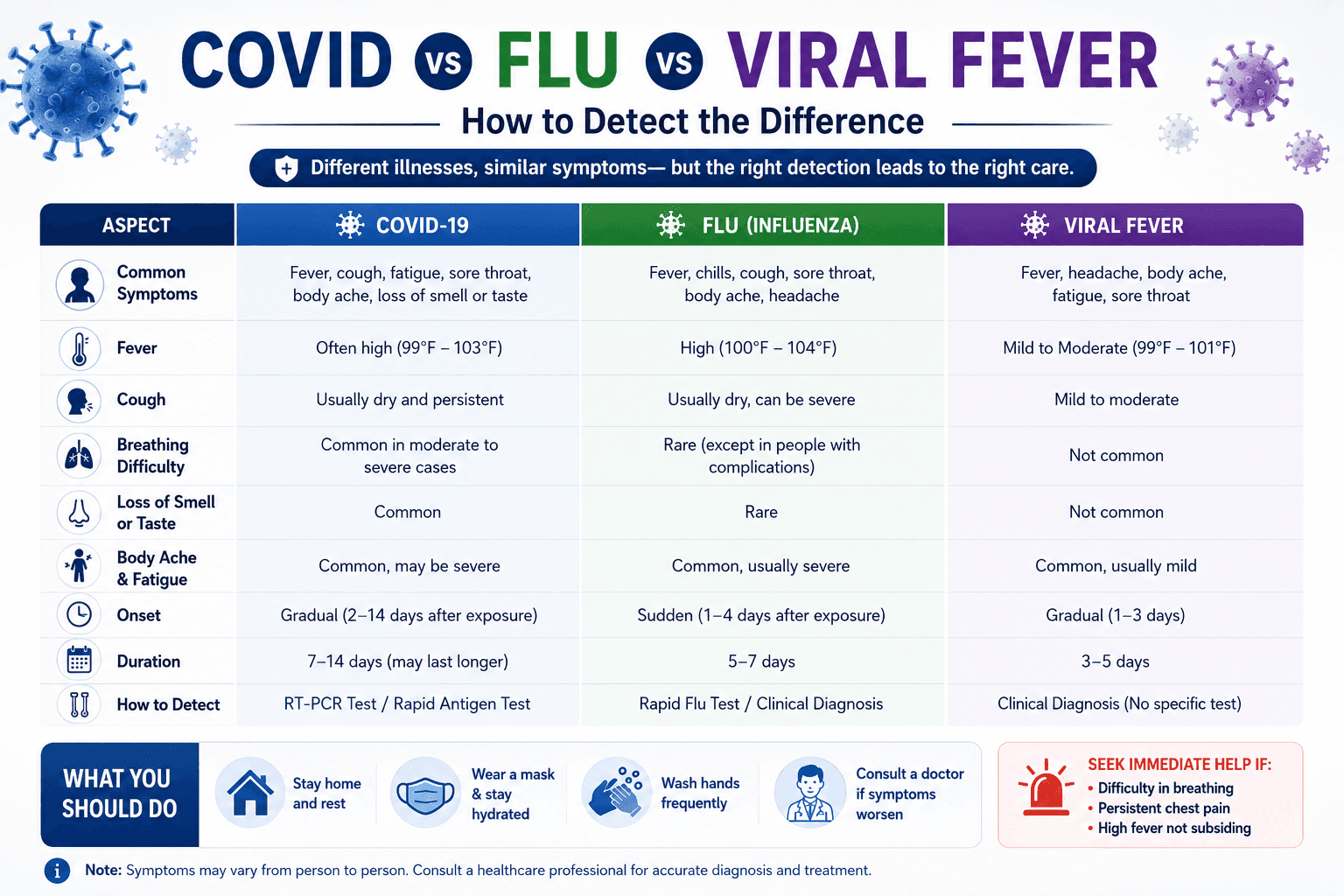
COVID vs Flu vs Viral Fever – Why It’s So Confusing
Fever, body pain, cough, weakness…
These symptoms can happen in:
- COVID-19
- Seasonal flu
- Viral fever
And that’s exactly why many people get confused.
“Is it just viral fever?”
“Could this be flu?”
“Do I need a COVID test?”
The truth is:
All three conditions share similar symptoms, but the causes and risks are different
Understanding the difference helps you take the right treatment at the right time.
What is Viral Fever?
“Viral fever” is a general term used for fever caused by viral infections.
Common symptoms include:
- Fever
- Body pains
- Weakness
- Headache
Usually improves within a few days with rest and hydration.
What is Seasonal Flu?
Flu (Influenza) is a contagious respiratory infection caused by influenza viruses.
Symptoms are usually stronger than common viral fever.
Common flu symptoms:
- High fever
- Chills
- Dry cough
- Sore throat
- Muscle pain
Flu spreads quickly, especially during seasonal changes.
What is COVID-19?
COVID-19 is caused by the coronavirus (SARS-CoV-2).
While symptoms may look similar to flu initially, COVID can affect:
- Lungs
- Breathing
- Oxygen levels
Some people experience only mild symptoms, while others may develop serious complications.
Warning Signs You Should Not Ignore
Seek medical attention if you experience:
- Difficulty breathing
- Chest pain
- Persistent high fever
- Low oxygen levels
- Extreme weakness
These may indicate a more serious infection.
How Doctors Detect the Difference
Symptoms alone are not always enough.
Diagnostic tests help identify the exact cause.
1. COVID RT-PCR Test
Most accurate test for COVID-19 detection.
Used when:
- COVID symptoms exist
- Exposure history is present
2. Rapid Antigen Test
Provides quick COVID screening results.
Faster, but RT-PCR is more accurate.
3. CBC Test (Complete Blood Count)
Helps doctors understand:
- Infection severity
- Viral vs bacterial pattern
Commonly recommended in fever cases.
4. CRP & Inflammatory Markers
Checks inflammation levels in the body.
Useful in moderate or severe infections.
5. Chest X-Ray / CT Scan (If Required)
Done when:
- Breathing issues exist
- Lung infection is suspected
Helps assess lung involvement.
Why Self-Diagnosis Can Be Risky
Many people:
Assume it’s “just viral fever”
Delay testing
Continue going to work or public places
This can delay treatment and spread infection.
What Should You Do if You Have Symptoms?
Rest & Hydration
Drink plenty of fluids and rest well.
Monitor Temperature & Oxygen
Use:
- Thermometer
- Pulse oximeter
Get Tested if Symptoms Persist
Especially if:
- Fever lasts more than 2–3 days
- Breathing difficulty develops
- COVID exposure is suspected
Early testing helps avoid complications.
Convenient Testing from Home
Focus Diagnostics offers:
- Home sample collection for COVID and blood tests
- Safe and hygienic process
- Fast and accurate reports
Focus Diagnostics – Infection Testing in Hyderabad
Available at:
- Kompally
- KPHB
- Punjagutta
- Khajaguda
- Chintal
Reliable diagnostics for fever and infection detection
Key Takeaways
- COVID, flu, and viral fever share similar symptoms
- Loss of smell/taste is more common in COVID
- Testing is the best way to confirm diagnosis
- Don’t ignore persistent fever or breathing issues
Early detection helps faster recovery and safer care
Conclusion
COVID, flu, and viral fever may look similar in the beginning, but proper diagnosis is essential for correct treatment and recovery. Instead of guessing, it’s always safer to test and confirm.
Don’t ignore symptoms—early detection protects both you and your family
Frequently Asked Questions (FAQs)
1. How can I tell if it’s COVID or flu?
Symptoms are similar, so testing is the most reliable way to confirm.
2. Is loss of smell common in flu?
It is more commonly associated with COVID-19.
3. When should I get tested?
If symptoms persist beyond 2–3 days or you have exposure history.
4. Can viral fever become serious?
Usually mild, but severe fever or breathing difficulty needs medical attention.
5. Which test is best for COVID detection?
RT-PCR is considered the most accurate test.