Allergy Testing in Children: When Should Parents Be Concerned?
By Allergy Testing in Children
15 May 2026
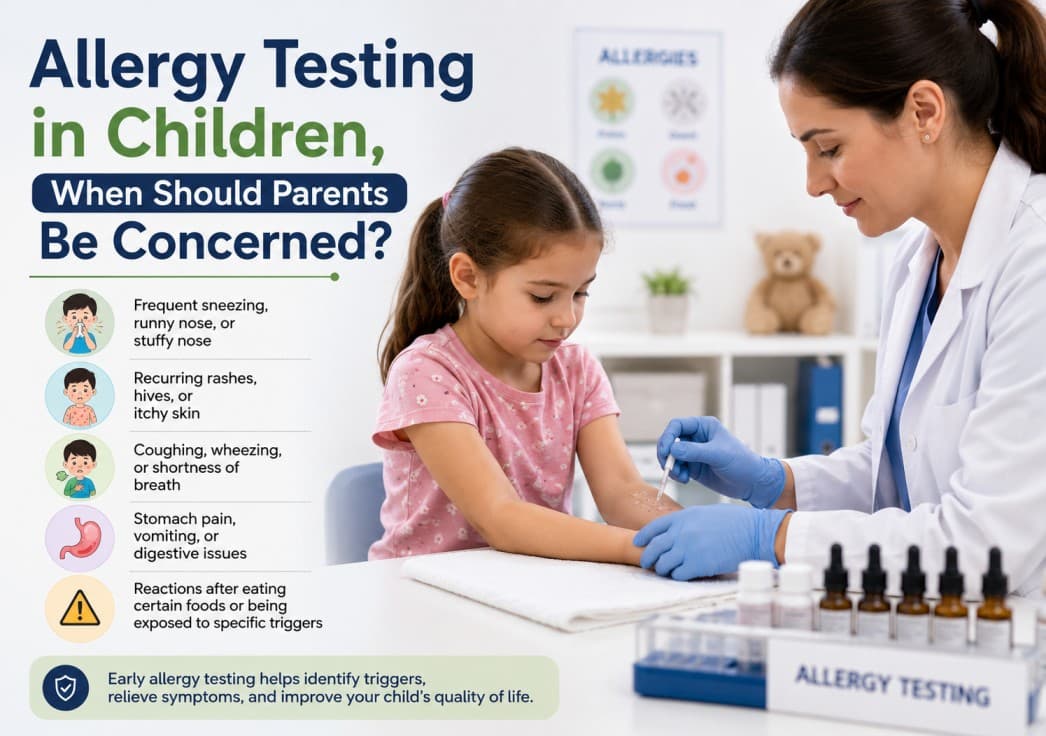
Allergy Testing in Children: Signs Parents Should Never Ignore
Children often experience:
- Sneezing
- Rashes
- Cough
- Stomach discomfort
Most parents assume it’s seasonal illness or minor infection.
But sometimes:
These symptoms may actually be caused by allergies
The challenge is:
Allergies in children are often misunderstood or ignored.
Early testing can help identify triggers and prevent long-term health problems.
What is an Allergy?
An allergy happens when the immune system reacts strongly to substances that are normally harmless.
These substances are called:
Allergens
Common allergens include:
- Dust
- Pollen
- Certain foods
- Pet hair
- Medicines
Common Allergy Symptoms in Children
Children may show allergies in different ways.
Watch for:
Respiratory Symptoms
- Frequent sneezing
- Runny nose
- Nasal blockage
- Repeated cough
Skin Symptoms
- Itching
- Red rashes
- Eczema
- Skin irritation
Food Allergy Symptoms
- Vomiting
- Stomach pain
- Diarrhea
- Swelling after eating certain foods
Severe Reactions (Emergency Signs)
- Breathing difficulty
- Facial swelling
- Wheezing
These require immediate medical attention.
Why Allergy Testing is Important
Without testing:
Parents may keep guessing the cause
Symptoms may continue repeatedly
Allergy testing helps identify the exact trigger.
This helps:
- Avoid allergens
- Reduce symptoms
- Improve child’s comfort and health
Types of Allergy Tests for Children
1. Blood Allergy Test (IgE Test)
A simple blood test used to detect allergic reactions.
Useful for:
- Food allergies
- Dust allergies
- Environmental allergies
2. Skin Prick Test
Small amounts of allergens are placed on skin to check reactions.
Commonly used for:
- Pollen
- Dust
- Pet allergies
3. Food Allergy Panel
Checks reactions to common foods like:
- Milk
- Eggs
- Nuts
- Seafood
Helpful for children with digestive or skin symptoms.
When Should Parents Consider Allergy Testing?
You should consider testing if your child has:
- Repeated sneezing or cough
- Frequent skin rashes
- Symptoms after certain foods
- Family history of allergies or asthma
Recurrent symptoms should not be ignored.

If symptoms happen repeatedly, allergy may be the reason.
Can Allergies Be Controlled?
Yes.
Once triggers are identified:
- Avoidance becomes easier
- Medication can help
- Lifestyle changes reduce reactions
Early diagnosis improves quality of life.
Common Childhood Allergies in India
Many children commonly react to:
- Dust mites
- Pollution
- Milk products
- Seasonal pollen
Urban lifestyle and pollution are increasing allergy cases.
Comfortable Blood Testing with Home Collection
Focus Diagnostics offers:
- Home sample collection for allergy blood tests
- Child-friendly and hygienic process
- Accurate reports
Focus Diagnostics – Pediatric Allergy Testing in Hyderabad
Available at:
- Kompally
- KPHB
- Punjagutta
- Khajaguda
- Chintal
Reliable diagnostic care for children
Key Takeaways
- Allergies in children are common but often ignored
- Symptoms may affect skin, breathing, or digestion
- Allergy testing helps identify triggers early
- Early care improves comfort and prevents complications
Understanding the trigger is the first step to protection
Conclusion
Allergies in children should never be ignored as “just seasonal problems.” Identifying triggers early can help prevent repeated discomfort and improve your child’s overall health.
Frequently Asked Questions (FAQs)
1. At what age can children do allergy testing?
Allergy testing can be done even in young children if symptoms exist.
2. Is allergy testing painful?
Blood tests involve minimal discomfort. Skin tests are generally mild.
3. Can food allergies be detected through blood tests?
Yes. Food allergy panels help identify allergic foods.
4. Are allergies curable?
Most allergies can be controlled effectively with proper management.
5. When should parents worry about allergies?
If symptoms are frequent, severe, or recurring, testing is recommended.